Wondering if house hacking in Longmont is still realistic with today’s prices? The short answer is yes, but only if you buy with a clear plan. In this market, the numbers usually work best when a property has more than one rentable component, such as a duplex, triplex, or legal ADU, rather than relying on a single extra bedroom to carry the deal. If you want to live in one part of the property and let rental income help with your payment, here’s where small multifamily can make the most sense in Longmont. Let’s dive in.
Why Longmont House Hacking Is Different
Longmont gives you real opportunity, but it is not an easy cash-flow market across the board. Zillow reports a typical Longmont home value of $556,720 and average rent of $1,858 per month, while the same market snapshot points to a rough home-value-to-annual-rent ratio of about 25x. In plain English, that means a single rent stream often will not comfortably cover a mortgage on a typical home.
That is why the better house-hack setups in Longmont usually involve small multifamily properties, a legal ADU, or a lower-priced purchase. Redfin’s March 2026 data cited in the research also shows a median sale price around $575,000, about 51 days on market, and roughly 2 offers on average, which suggests you may have some room to evaluate options without the frenzy of a hyper-competitive market. You still need to buy carefully, but you are not necessarily racing blind.
Best Property Types for House Hacking
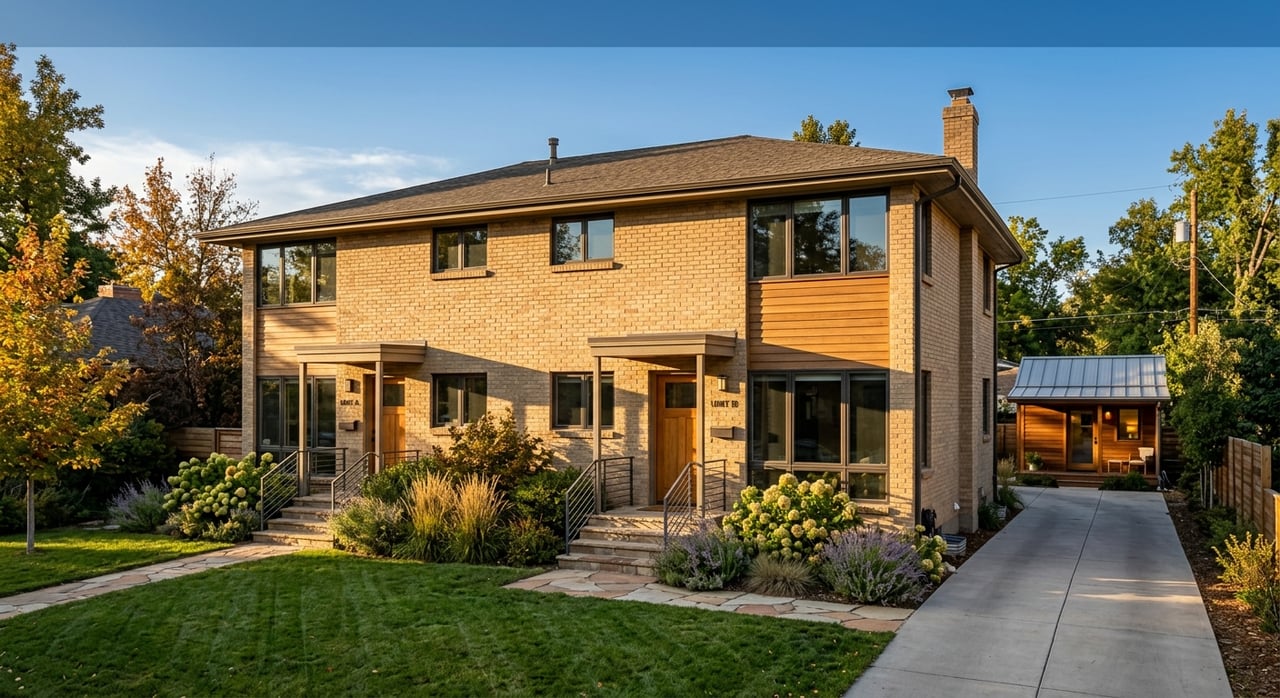
Duplexes and triplexes
If your goal is the cleanest path to offsetting your housing cost, a duplex or triplex is often the most straightforward option. You live in one unit and rent the others, which gives you more income potential than a single room rental or basement setup.
Longmont’s planning framework is also more supportive of small-scale infill housing than many buyers expect. Envision Longmont describes Mixed-Neighborhood land use as allowing housing types such as duplexes, triplexes, townhomes, multifamily buildings, and ADUs. That does not mean every parcel will fit your plan, but it does mean small multifamily is part of the city’s broader housing pattern.
Single-family homes with a legal ADU
If you want more privacy than a duplex can offer, a detached home with a legal accessory dwelling unit can be a strong middle ground. You keep the feel of a single-family property while adding a second rentable space.
According to Longmont’s 2026 ADU Guide, ADUs are allowed in R-RU, R-SF, R-MN, R-MF, MU-D, and N-AG districts. The city allows one ADU per lot, most ADUs are capped at 800 square feet, and ADUs cannot be rented for fewer than 30 days. For a house hacker, that means ADUs can support a long-term rental plan, but they usually are not a short-term rental play.
Lower-priced homes with flexible layouts
If a duplex or ADU property is out of reach, your next best option may be a lower-priced single-family home with a layout that can support a boarder, roommate, or future ADU plan. This strategy is often more budget-friendly up front, but it requires very careful review of legal use, lot constraints, and financing.
For one-unit homes, financing programs can also matter. Fannie Mae’s HomeReady program allows 3% down on a principal residence and can accept rental payments or boarder income, which may help if your house-hack strategy is based on shared living or an ADU-compatible setup.
Where Small Multifamily Makes Sense in Longmont
Old Town and corridor-adjacent areas
If you are looking for the most natural fit for house hacking, start in the older parts of Longmont. The research points to the historic core and corridor-adjacent neighborhoods because they tend to have older housing stock, more small-multifamily examples, and better walkability and transit access.
Recent listing examples in West Old Town and Old Town include homes built in 1910, 1922, 1925, 1947, and 1951, along with properties marketed as a duplex or a home with an income carriage apartment. That mix of older homes and flexible structures is often exactly what house hackers need, especially if you want a property with character and a built-in rental angle.
Southmoor, Loomiller, and Garden Acres
Price still matters, especially in a market where rent does not always keep pace with home values. Zillow neighborhood data in the research shows Southmoor at about $497,492, Loomiller at about $485,702, and Garden Acres at about $473,472, all sitting below the citywide typical value.
That lower entry point can improve your odds of finding a deal that actually pencils out. The research also notes a current Southmoor duplex listing at $500,000, which is the kind of pricing range that tends to catch the attention of first-time house hackers and small investors.
Central Business District
The Central Business District is another area worth watching, with Zillow values in the research around $553,183. It is closer to the citywide typical value, but the area appears to offer multiple small-multifamily options, including duplexes and triplexes.
This part of Longmont may appeal if you care about a more walkable location and long-term tenant demand. The city’s planning work around downtown, Main Street, and Coffman emphasizes mixed-use redevelopment and stronger pedestrian, bicycle, and transit connections, which supports the case for rental demand in these inner-ring areas.
Higher-priced neighborhoods
Not every Longmont neighborhood is a natural first-year cash-flow fit. The research shows McIntosh around $657,757 and Longmont Estates around $565,949, which pushes these areas more toward equity-focused owner-occupant buyers than budget-conscious house hackers.
That does not make them bad long-term holds. It just means they are often less forgiving if your plan depends on rental income carrying a large share of the payment right away.
ADU Rules You Need to Know
Longmont is fairly ADU-friendly, but the rules matter. The city’s ADU Guide says the applicant must be a Longmont resident who owns a detached home that was legally permitted when built. That is a key detail if you are buying specifically to add a second unit later.
You also need to understand the short-term rental limits. Longmont’s short-term rental page says ADUs cannot legally operate as short-term rentals, except in specific planned developments such as Prospect and Riverside at Mill Village where site plans allow it. The same page says only Longmont residents are eligible for a short-term rental license.
For most buyers, the takeaway is simple: underwrite your deal as a long-term rental, not a vacation rental. If the numbers only work with short-term rental income, it is probably the wrong Longmont house hack.
Financing Shapes the Deal
The right loan can open doors, especially if you are buying a small multifamily property as your primary home. HUD says FHA-insured mortgages can be used for 2- to 4-unit properties, with a minimum required investment of 3.5% in most cases.
Conventional financing can work too, but the structure matters. The research cites 2026 Boulder County conforming limits of $879,750 for one unit, $1,126,250 for two units, $1,361,350 for three units, and $1,691,850 for four units, along with Freddie Mac guidance that allows 95% loan-to-value on a two-unit primary residence and 80% on a three- or four-unit primary residence, with Home Possible reaching 95% LTV on 2- to 4-unit primary residences.
Just remember that lenders usually do not give you full credit for future rent. Fannie Mae guidance in the research says rental income for a 2- to 4-unit primary residence is generally treated at 75% of gross rent, and a two- to four-unit principal residence typically requires six months of reserves. That is a healthy reminder to leave room in your budget for vacancy, repairs, taxes, insurance, and the unexpected.
Tenant Demand Favors Walkable Areas
If you are counting on stable long-term renters, location inside Longmont still matters. The city’s planning documents and ADU guide consistently support infill housing, walkability, and stronger connections around downtown, Main Street, and Coffman.
That is why the strongest tenant demand is likely in or near downtown, Old Town, Main Street, and other inner-ring areas with better access to daily amenities and transportation connections. This is an inference from the city’s planning priorities, but it lines up with what many buyers already want in a live-work-play setup: convenience, character, and less dependence on a car.
Due Diligence Before You Buy
A promising listing is not enough. In Longmont, the real work is confirming that the property supports your plan legally, financially, and physically.
Before you write an offer, make sure you verify:
- Zoning and legal unit status
- Whether an ADU is allowed on the parcel
- Setbacks, lot coverage, and survey issues
- Parking requirements, alley access, and frontage details
- Any landmark or historic-preservation review requirements
Longmont’s Rental Property Handbook also notes that the city does not license rental property, though rentals must comply with the Property Maintenance Code and may be inspected if complaints arise. That can make a standard long-term house-hack strategy simpler than navigating a heavily licensed rental system, but it does not replace proper due diligence.
So, Where Does House Hacking Work Best?
In Longmont, the best house-hack opportunities are usually not the shiny, highest-priced homes. They tend to be duplexes, triplexes, older homes with legal income components, and ADU-friendly properties in or near the historic core and corridor areas. The sweet spot is often a property that gives you more than one income stream or a lower entry price, paired with a location that supports long-term renter demand.
If you want help identifying the neighborhoods, property types, and financing angles that fit your goals, Meagan Griesel can help you build a neighborhood-first strategy for Longmont and the wider Northern Colorado market.
FAQs
Is house hacking in Longmont realistic at current home prices?
- Yes, but it tends to work best when you buy a duplex, triplex, home with a legal ADU, or a lower-priced property rather than relying on one simple rent stream.
Are ADUs allowed for house hacking in Longmont?
- Yes, ADUs are allowed in several zoning districts, but the property must meet city requirements, only one ADU is allowed per lot, and most ADUs are capped at 800 square feet.
Can you use a Longmont ADU as a short-term rental?
- Usually no. Longmont says ADUs cannot legally operate as short-term rentals except in certain planned developments where that use is specifically allowed.
Which Longmont neighborhoods may fit house hacking best?
- Based on the research, Old Town, West Old Town, Southmoor, Loomiller, Garden Acres, and parts of the Central Business District may offer stronger options because of older housing stock, lower pricing, or small-multifamily inventory.
What loan options can help with a Longmont house hack?
- FHA financing may work for 2- to 4-unit primary residences with as little as 3.5% down in many cases, and some conventional products also allow low-down-payment options for owner-occupied small multifamily purchases.
What should you verify before buying a house-hack property in Longmont?
- You should confirm zoning, legal unit status, ADU eligibility, setbacks, parking, alley access, and whether the property may be subject to historic or landmark review.